

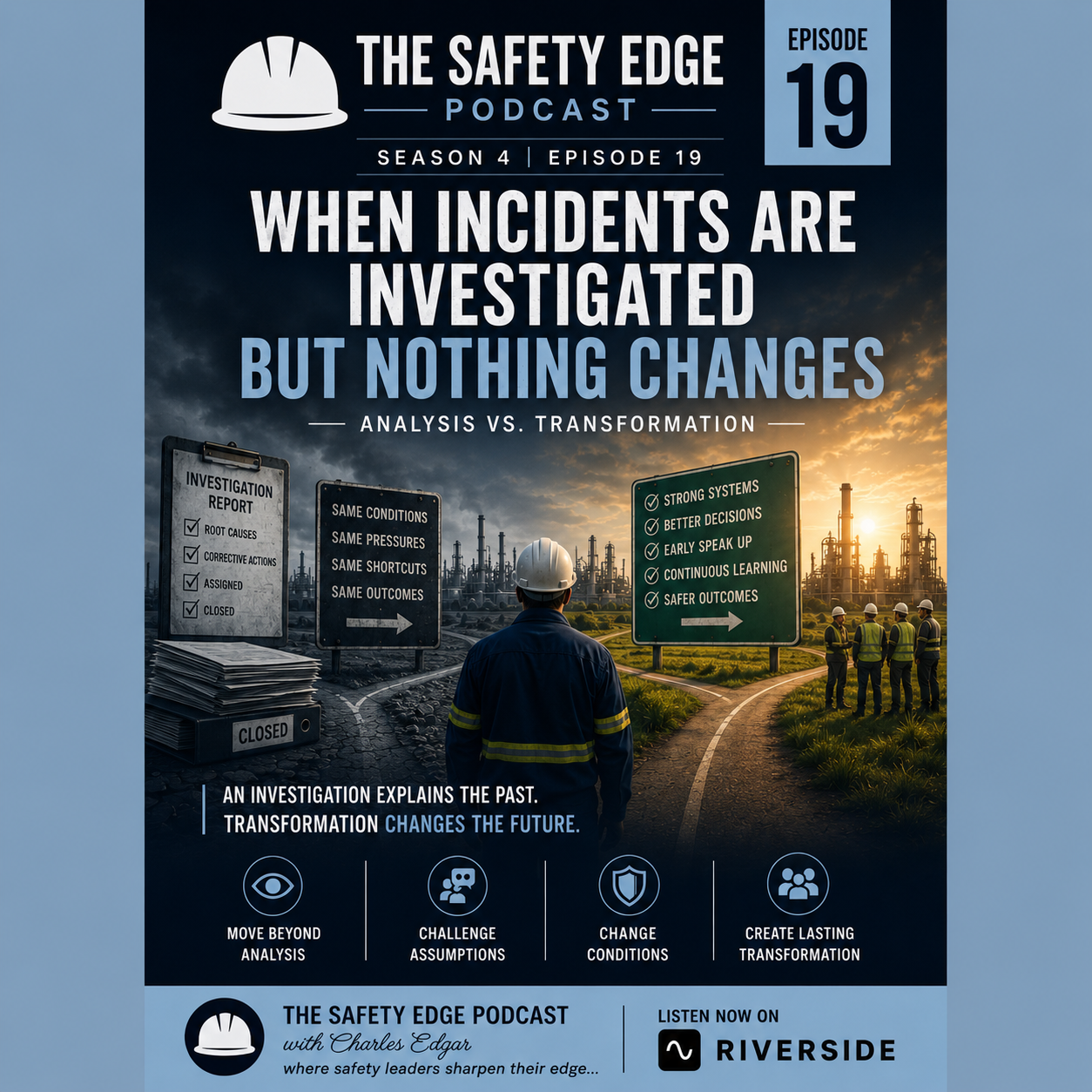
This episode explores what happens when organizations investigate incidents thoroughly, identify the causes, assign corrective actions—and yet meaningful change still doesn't happen.
We unpack:
Why completing an investigation doesn't necessarily mean an organization has learned
The difference between analysis and transformation
Why corrective-action closure can create a sense of completion without addressing deeper system conditions
How organizational pressures, assumptions, and workarounds can remain even after an incident
Why leaders need to look beyond "What happened?" and ask "What made this possible?"
The role of leadership in turning investigation findings into meaningful organizational change
How coaching conversations can challenge assumptions and create deeper learning
Why measuring completed actions is different from measuring whether the system has actually changed
How embedding lessons into everyday work creates stronger, more resilient organizations
At the heart of it is a critical shift:
An investigation can explain the past. Transformation changes the future.
And in that moment, when leadership stops asking, "Did we close the corrective actions?" and starts asking, "What is different now because this incident happened?"—
that is The Edge.
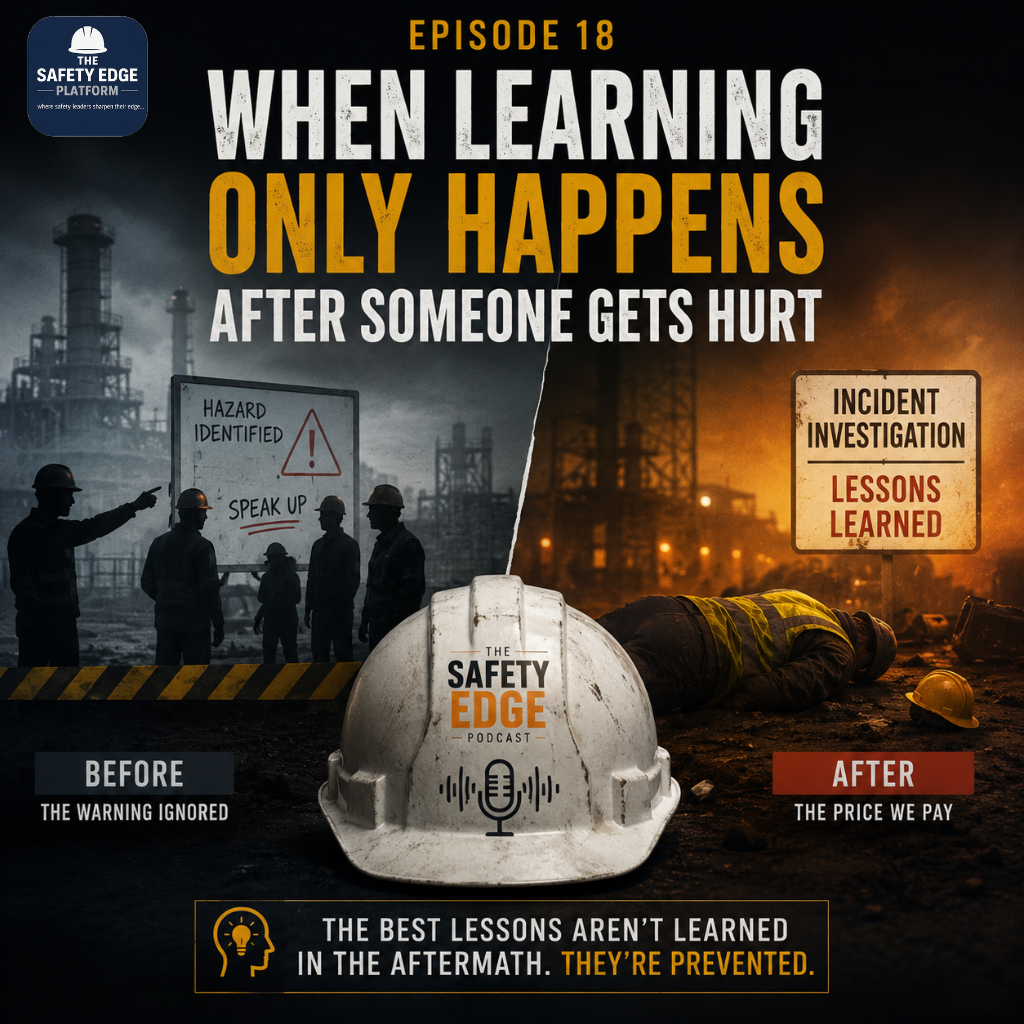
This episode explores why organizations often wait until someone gets hurt before meaningful learning begins—and how that mindset keeps safety reactive instead of proactive.
We unpack:
Why incidents shouldn't be the primary trigger for organizational learning
How successful work often contains the earliest opportunities for improvement
Why weak signals are frequently overlooked until after harm occurs
The difference between learning from failure and learning before failure
The role of leaders in creating curiosity before consequences
How psychologically safe conversations encourage people to speak up early
Why continuous operational learning builds stronger, more resilient organizations
At the heart of it is a critical shift:
And in that moment, when leadership stops asking, "What can we learn because someone got hurt?" and starts asking, "What can we learn before anyone gets hurt?"—that is the edge.
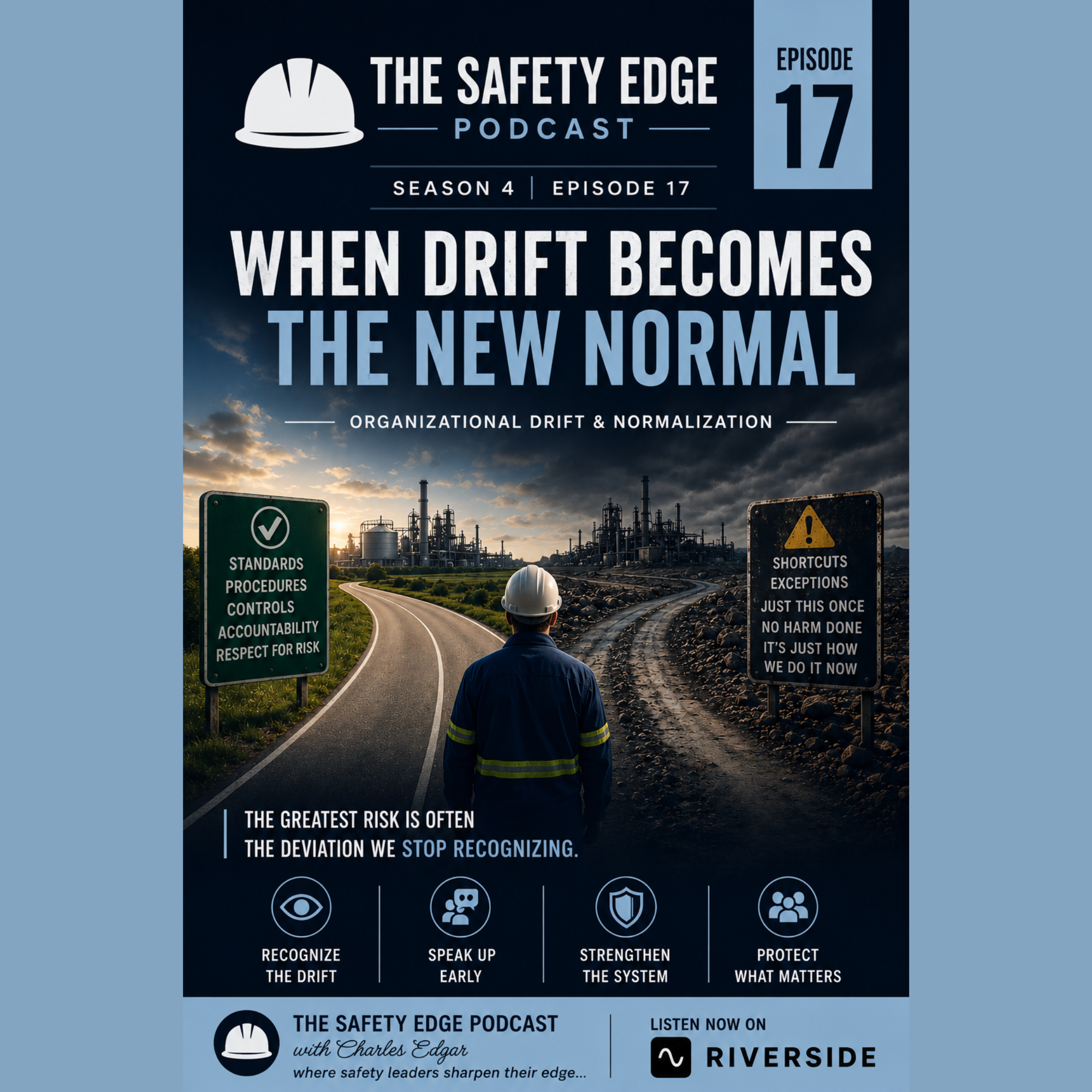
This episode explores the hidden risks that emerge when temporary exceptions, operational pressures, and repeated compromises slowly become accepted as normal practice.
We unpack:
• How organizational drift develops one small compromise at a time
• Why temporary workarounds often become permanent ways of working
• How successful outcomes can conceal growing risk
• The role of operational pressure in reshaping acceptable standards
• Why repeated deviations stop feeling like deviations at all
• How leaders can identify drift before incidents expose it
• The importance of creating space for people to challenge normalized practices
At the heart of it is a critical shift:
From measuring success solely by outcomes to understanding how those outcomes are being achieved.
And in that moment, when leaders stop asking, "Did we achieve the target?" and start asking, "What standards have quietly changed while achieving it?" — that is the edge.
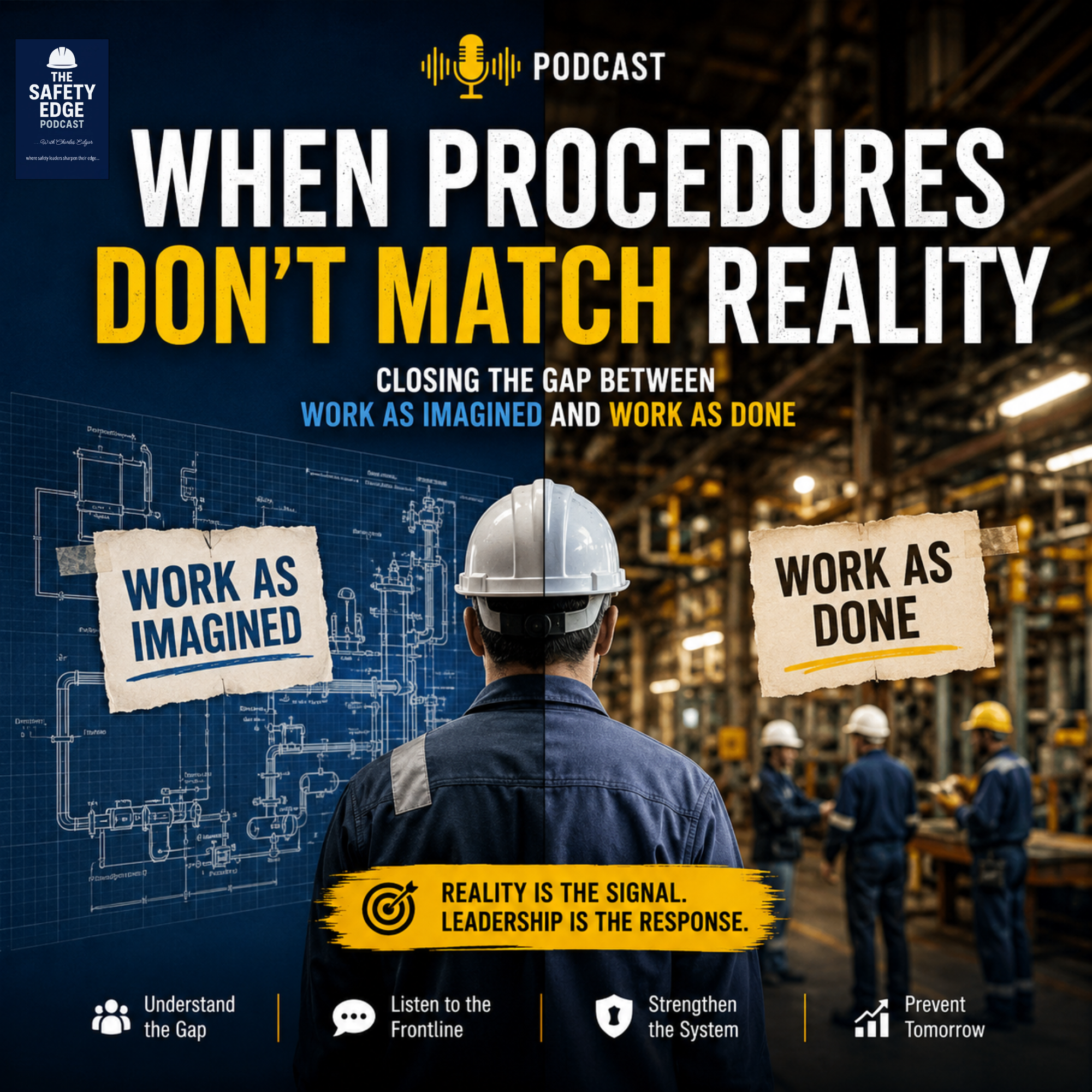
This episode explores the hidden risks that emerge when procedures no longer reflect operational reality and frontline workers quietly adapt just to keep work moving.
We unpack:
Why procedures lose credibility when they ignore real-world conditions
How hidden adaptations become normalized over time
The gap between Work as Imagined and Work as Done
Why workarounds are often signals of system weakness, not worker failure
The role of frontline supervisors in identifying weak signals early
How psychologically safe conversations strengthen operational learning
Why proactive organizations reinforce what is working before failure occurs
At the heart of it is a critical shift:
And in that moment, when leadership stops asking why people deviated from the procedure and starts asking what the procedure failed to see, that is the edge.
In this episode, I sit down with Rich Lohman to explore what it means to become a Fully Resourced Leader and make better decisions under pressure.
We unpack:
• What it means to be fully resourced as a leader
• Why leadership capacity matters when pressure and uncertainty increase
• How energy, knowledge, skills, confidence, emotional regulation, and support systems influence decision making
• Why leaders need to recognize both their strengths and their gaps
• The importance of inviting different perspectives and knowing when to ask for help
• How preparation before pressure arrives strengthens leadership judgment
• How coaching conversations can challenge assumptions, uncover blind spots, and build capacity
• Why being fully resourced isn't about having all the answers, but having the capacity to navigate complexity effectively
At the heart of it is a simple idea:
Better decisions under pressure don't happen by accident. They are built before the pressure arrives.
And when leaders develop the capacity to think clearly, recognize their limits, invite different perspectives, and draw on the right resources when it matters most—
that is The Edge.